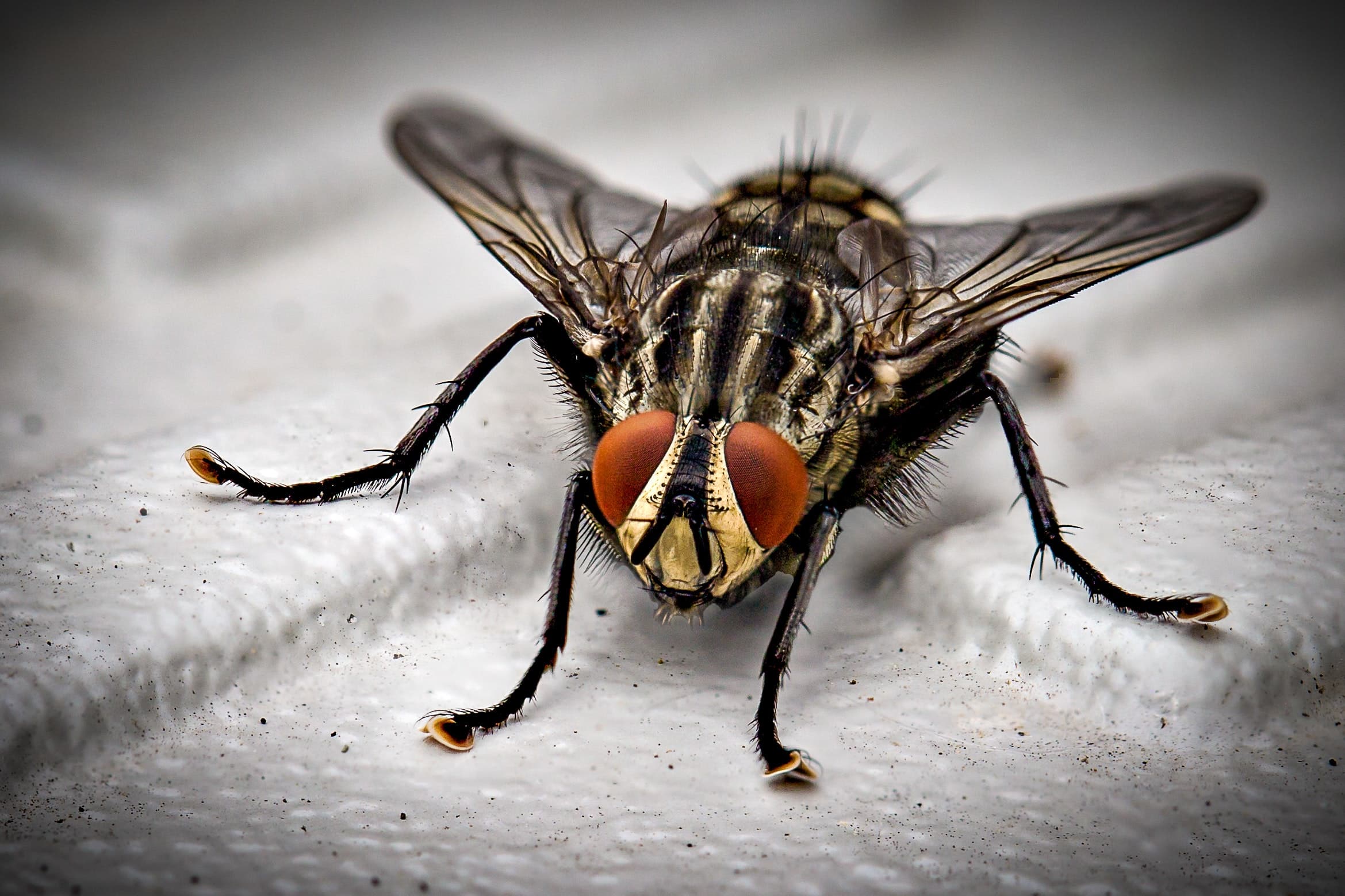
Professional Fly Control
From house flies to drain flies, we identify the species, eliminate breeding sources, and apply targeted treatments to keep flies out of your home.
Identify, Eliminate & Prevent
Flies are more than a nuisance — they carry and spread bacteria, contaminating food and surfaces throughout your home. Different fly species indicate different underlying issues: drain flies point to organic buildup in plumbing, fruit flies signal fermenting produce or spills, cluster flies invade in large numbers seeking winter shelter, and blow flies may indicate a dead animal in a wall void. Effective fly control requires identifying the species and addressing the specific breeding source, not just swatting the adults. Our technicians identify the fly species, locate and eliminate the breeding source, and apply targeted treatments to reduce adult populations and prevent recurrence.
- House Fly Control
- Drain Fly Treatment
- Cluster Fly Exclusion
- Fruit Fly Elimination
Common Fly Species We Treat
House Flies
The most common fly pest, house flies breed in decaying organic matter, garbage, and animal waste. They spread bacteria by landing on food and surfaces after visiting unsanitary breeding sites. A single female can lay 500+ eggs in her lifetime.
Blow Flies
Metallic green or blue flies that are strongly attracted to decaying organic matter. Blow flies appearing inside a home often indicate a dead animal in a wall void, attic, or crawl space.
Cluster Flies
Slightly larger than house flies, cluster flies invade homes in large numbers in fall seeking warm overwintering sites. They cluster in attic spaces, wall voids, and around sunny windows. They do not breed indoors.
Drain Flies
Small, moth-like flies that breed in the organic film that builds up inside drains, particularly in infrequently used sinks, floor drains, and shower drains. They hover near their breeding drain and are poor fliers.
Vinegar Fruit Flies
Tiny flies attracted to ripening or fermenting fruit, spilled beverages, and moist organic matter. They reproduce extremely quickly — a population can explode from a few flies to hundreds within a week if breeding sources are available.
Our Fly Control Process
Every treatment follows our proven three-step approach to eliminate pests and keep them from coming back.
Inspect
We identify the fly species and locate the breeding source — whether it is a drain, garbage area, decaying organic matter, or structural issue allowing cluster fly entry.
Treat
Breeding sources are addressed directly: drain treatments for drain flies, sanitation and bait programs for house flies, exclusion and residual treatments for cluster flies. Adult populations are knocked down with targeted applications.
Prevent
Ongoing prevention includes drain maintenance recommendations, exclusion work to seal cluster fly entry points, and sanitation guidance. Quarterly treatments maintain protection.
Signs of a Fly Problem
- Persistent flies in the kitchen despite keeping things clean
- Small moth-like flies hovering near bathroom or basement drains
- Tiny flies around fruit bowls, trash cans, or recycling bins
- Large numbers of sluggish flies appearing on sunny windows in fall or spring (cluster flies)
- Metallic green or blue flies appearing inside, potentially indicating a dead animal in a wall void
Fly Prevention Tips
Reduce your risk of infestation with these expert recommendations.
Keep kitchen surfaces clean and take out garbage regularly in sealed bags.
Run water through infrequently used drains weekly to prevent organic film buildup that breeds drain flies.
Store fruit in the refrigerator and clean up spills and crumbs promptly to avoid attracting fruit flies.
Seal gaps around windows, eaves, and siding in late summer before cluster flies seek winter shelter.
Ensure window screens are intact and fit tightly with no gaps.
Frequently Asked Questions
Why do I have flies in my bathroom?
Small, moth-like flies near drains are likely drain flies. They breed in the organic film that accumulates inside drain pipes. We treat the drains directly and recommend regular maintenance to prevent recurrence.
What are the large sluggish flies on my windows?
Those are likely cluster flies. They enter homes in fall to overwinter in wall voids and attic spaces, then become active on warm days throughout winter and spring. They do not breed indoors but can appear in large numbers. Exclusion work before fall is the best prevention.
How do I get rid of fruit flies?
Eliminating the breeding source is essential. Remove overripe fruit, clean spills, and sanitize recycling bins. We can also provide targeted treatments and traps for persistent infestations.
Ready to get started?
Call now and get $50 off pest control.
Call before 2pm and get same-day service.
Call Now and Save