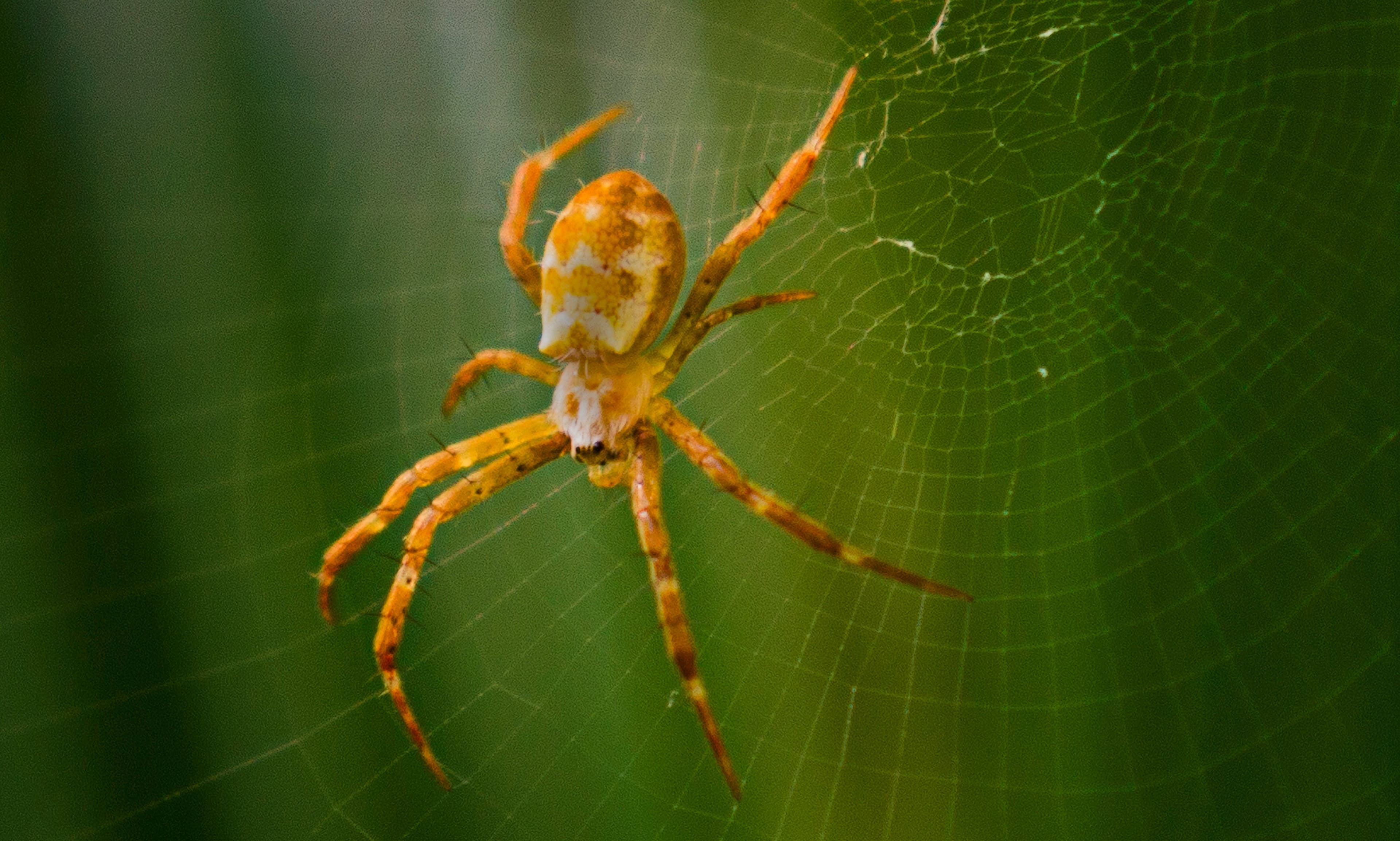
Professional Spider Control
Whether you are dealing with common house spiders or more concerning species, we remove webs, treat entry points, and reduce the prey that attracts spiders.
Spider Removal & Prevention
Spiders enter homes searching for prey — other insects — so spider problems often indicate a broader pest issue. While most household spiders are harmless, their webs create unsightly messes on eaves, porches, windows, and interior corners. Some species like brown recluse and black widow spiders can pose health risks with their venomous bites. Our spider control program takes a dual approach: we treat for spiders directly through web removal, residual treatments at entry points, and targeted applications in areas where spiders harbor, while also reducing the insect populations that attract spiders to your home in the first place.
- Web Removal
- Entry Point Treatment
- Species Identification
- Ongoing Prevention
Common Spider Species We Treat
Spiders
Common household spiders in the Northeast include cellar spiders (daddy longlegs), common house spiders, wolf spiders, and garden spiders. While most are harmless and even beneficial as insect predators, large populations create unsightly webs and cause concern for homeowners.
Our Spider Control Process
Every treatment follows our proven three-step approach to eliminate pests and keep them from coming back.
Inspect
We survey your property for web concentrations, spider entry points, and the insect populations that serve as their food source. We identify spider species to determine if any pose health concerns.
Treat
Web removal around the exterior, residual treatments at entry points and common harborage areas, and interior spot treatments where spiders are found. We also treat for the insects that attract spiders.
Prevent
Exterior barrier treatments reduce both spiders and their prey. We recommend lighting changes and exclusion work to minimize insect attraction to your home, which in turn reduces spider populations.
Signs of a Spider Problem
- Visible webs accumulating on eaves, porches, window frames, and corners
- Live spiders seen in garages, basements, attics, or secluded areas
- Egg sacs attached to webs or hidden in sheltered areas
- An increase in other insects inside your home (spiders follow their food source)
Spider Prevention Tips
Reduce your risk of infestation with these expert recommendations.
Reduce exterior lighting or switch to yellow/sodium vapor bulbs that attract fewer insects — fewer insects means fewer spiders.
Keep vegetation, mulch, and woodpiles away from your home's foundation.
Seal cracks and gaps around windows, doors, and utility penetrations.
Remove existing webs regularly — spiders may relocate if their webs are repeatedly disturbed.
Reduce clutter in basements, garages, and storage areas where spiders hide.
Frequently Asked Questions
Are the spiders in my home dangerous?
Most household spiders in the Northeast are harmless. Brown recluse spiders are rare in this region, and black widows are uncommon. However, any spider can bite if threatened, and some people may have allergic reactions. Our technicians can identify the species during your inspection.
Why do I have so many spiders?
Spiders go where the food is. A large spider population usually means you have an underlying insect problem. Our treatment addresses both the spiders and the insects that attract them, providing a more complete solution.
Can you keep spiders from coming back?
Our quarterly exterior barrier treatments significantly reduce both spiders and the insects they feed on. Combined with web removal and exclusion recommendations, most homeowners see a dramatic reduction in spider activity.
Ready to get started?
Call now and get $50 off pest control.
Call before 2pm and get same-day service.
Call Now and Save